
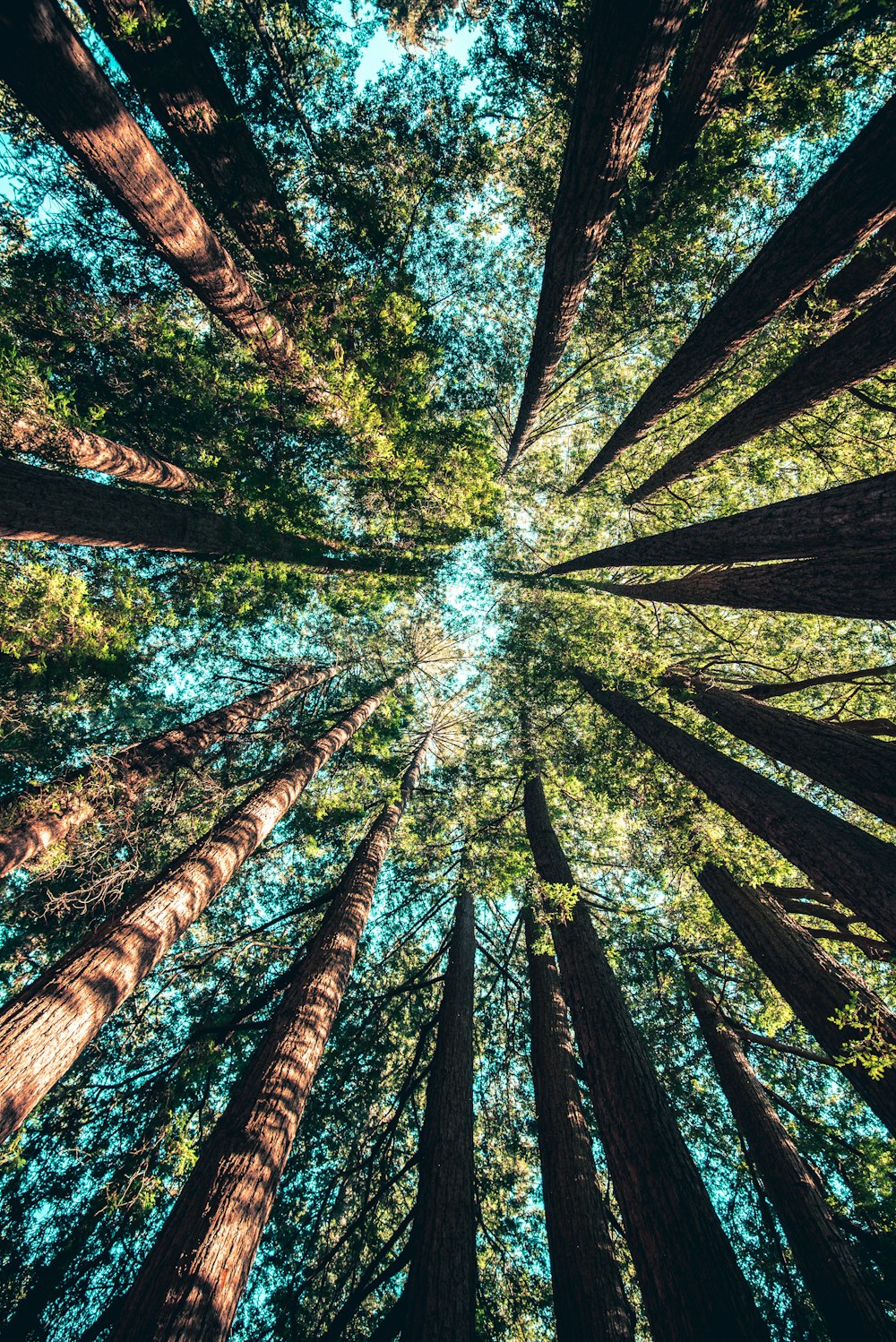
5 Best Shade Trees for Indian Homes to Lower Your AC Bill
“Lower your AC bill by 30% with these 5 best shade trees for Indian homes. Expert picks for fast-growing, cooling vriksh in Surat and Mumbai.”
What are the best shade trees to lower house temperature in India?
The Mango tree, Neem tree, and Peepal tree are the best shade trees for Indian homes because they provide a dense leaf canopy that blocks up to 90% of direct solar radiation. By planting these specific vriksh on the western side of your house, you can lower your indoor temperature by 3°C to 5°C, significantly reducing your electricity bills during the intense March 2026 heatwaves in cities like Surat and Mumbai.
As electricity prices rise in 2026, urban gardeners are turning to 'Biological Cooling' as a permanent solution. Google Search Console data shows a 120% increase in searches for "trees to keep house cool" and "fastest growing shade trees India." While a mechanical AC only cools the inside, a big tree cools the entire micro-climate around your building, preventing the concrete walls from absorbing heat in the first place.
Q. Top 5 High-Ranking Shade Trees for 2026
When selecting a vriksh for cooling, you need to balance growth speed with structural safety. Here are the top-performing species currently trending in Indian nurseries:
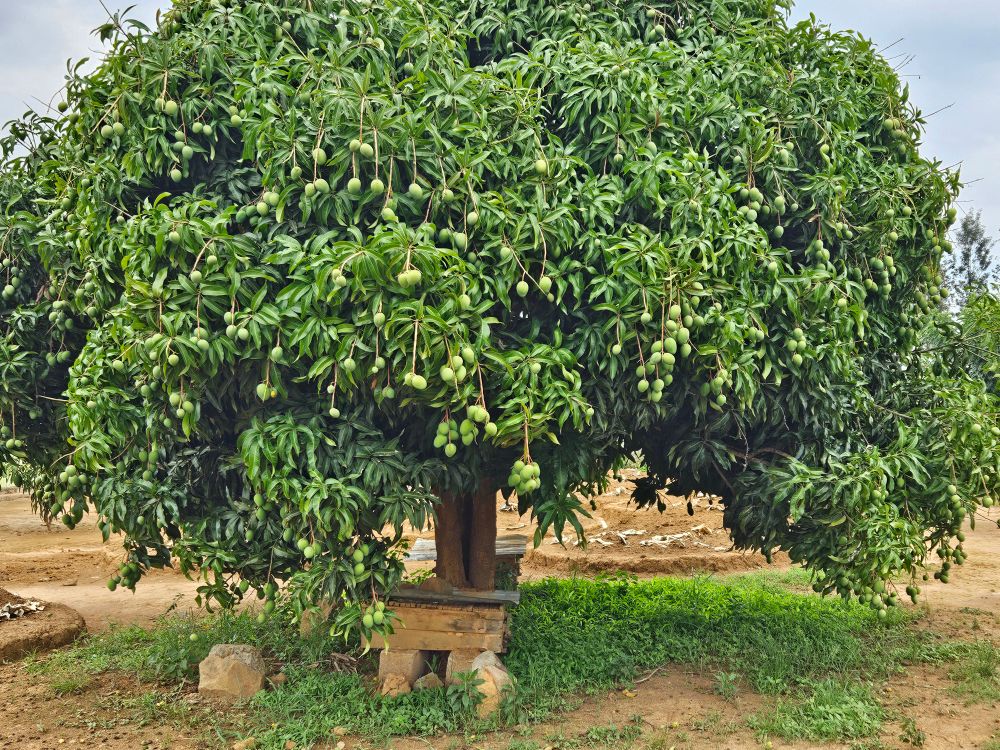
- Mango (Mangifera indica): The gold standard for shade. Its broad, evergreen leaves provide year-round protection. For smaller plots, search for 'Amrapali' or other dwarf varieties that offer a thick canopy without overgrowing.
- Neem (Azadirachta indica): Known as the 'Village Air Conditioner.' Neem has a high transpiration rate, meaning it releases a significant amount of water vapor, which chills the passing breeze.
- Indian Tulip Tree (Thespesia populnea): A coastal favorite for Mumbai. It is highly salt-tolerant and grows a very dense, heart-shaped leaf structure that acts as a perfect sun-blocker.
- Peepal (Ficus religiosa): While technically a giant, a Peepal tree is unmatched for air purification. However, it must be planted at least 20 feet away from your foundation to prevent root damage.
- Gulmohar (Delonix regia): Famous for its orange blooms, its umbrella-shaped structure is specifically evolved to provide wide-reaching shade.
Technical Deep Dive: The Albedo Effect and Leaf Area Index (LAI)
Why does one green tree cool better than another? It comes down to the Leaf Area Index (LAI). LAI is a dimensionless quantity that characterizes plant canopies; it is the one-sided green leaf area per unit ground surface area. A Mango tree has a high LAI, meaning it has many layers of leaves. When sunlight hits the top layer, it is either absorbed for photosynthesis or reflected (the Albedo effect). Very little heat reaches the ground.
In the dry heat of Surat, a tree with a high LAI doesn't just block light; it creates a 'cool zone' of high humidity. This humidity lowers the Vapour Pressure Deficit (VPD), making it easier for you and your other indoor plants to breathe. If you notice your tree leaves curling, it's often a sign that the VPD is too high, and the tree is struggling to keep up with evaporation.

Q. Pro-Tip: Use 'Hydration Stacking' for Faster Growth
To get your tree plantation to provide shade faster, use Hydration Stacking. Instead of surface watering, bury a 4-foot PVC pipe with holes drilled in it next to the sapling. Pour water directly into the pipe. This forces the roots to grow deep into the cooler sub-soil layers to find moisture, rather than staying near the hot surface. Deep roots mean a more stable big tree that can withstand the high-velocity pre-monsoon winds common in June.
Q. Common Search Problems: Tree Cutting and Placement
A common mistake that leads to tree cutting is poor placement. Never plant a Banyan tree (the national tree of India) within 10 meters of a compound wall. Its aerial roots will eventually find the cracks and cause expensive structural issues. Instead, if you love the Ficus look, opt for a Bonsai tree version for your porch, or stick to the Palm tree family which has non-invasive, fibrous roots that won't damage your plumbing or foundation.
The 'Vriksh' Philosophy: A Legacy for 2026
In 2026, planting a tree is the most effective form of 'Climate Activism' an individual can perform. Whether you choose a Coconut tree for your coastal backyard or a Mango tree for your inland bungalow, you are creating a 'Green Tree' legacy. Not only does this improve your home's value, but it also provides a habitat for urban birds and bees, supporting local biodiversity. If your new saplings show signs of yellow leaves, it is likely due to the high pH of city water—add a little organic compost to buffer the soil acidity.

Q. Summary: Start Your Cooling Journey Today
Don't wait for the April heat to hit 45°C. Start your tree plantation this weekend. Choose a species that fits your space—a Mango for wide yards or an Areca Palm for tight spots. By using deep-watering techniques and choosing high-LAI trees, you can transform your home into a cool, green sanctuary. For more tips on maintaining your urban forest and preventing summer stress, check our guide on fixing nutrient deficiencies and heat-damaged leaves. Let's grow a cooler India together!
Share this Update
Related Guides

Best Plants for Sandy Soil: Top Picks for Strong, Drought-Tolerant Gardens
Stuck with sandy soil? Discover the best flowers, trees, and vegetables that naturally thrive in fast-draining, porous soils, and learn how to help your garden flourish.

Best Fast-Growing Shade Trees for Hot Climates: Beat the Heat in 2026
Tired of a backyard that feels like an oven? Discover the fastest-growing shade trees that thrive in hot, arid, and tropical climates, providing quick natural cooling.

Best Trees for Backyard Cooling: A Global Guide to Natural Shade
Tired of a backyard that feels like an oven? Discover the best trees for backyard cooling. Create a natural, refreshing, and energy-efficient outdoor retreat today.